
Systems Engineering – An Effective Way To Manage Complexity And Change
Modern engineering projects are becoming more complex, involving multiple disciplines, advanced technologies, and strict performance requirements. Without a structured approach, projects often face delays, cost overruns, and integration challenges. This is where Systems Engineering (SE) provides a proven framework for managing complexity from concept to retirement.
Systems Engineering is a disciplined approach that focuses on the complete lifecycle of a system. It ensures that technical, operational, and business requirements are aligned throughout the system lifecycle, from concept and design through development, deployment, operation, and disposal stages.
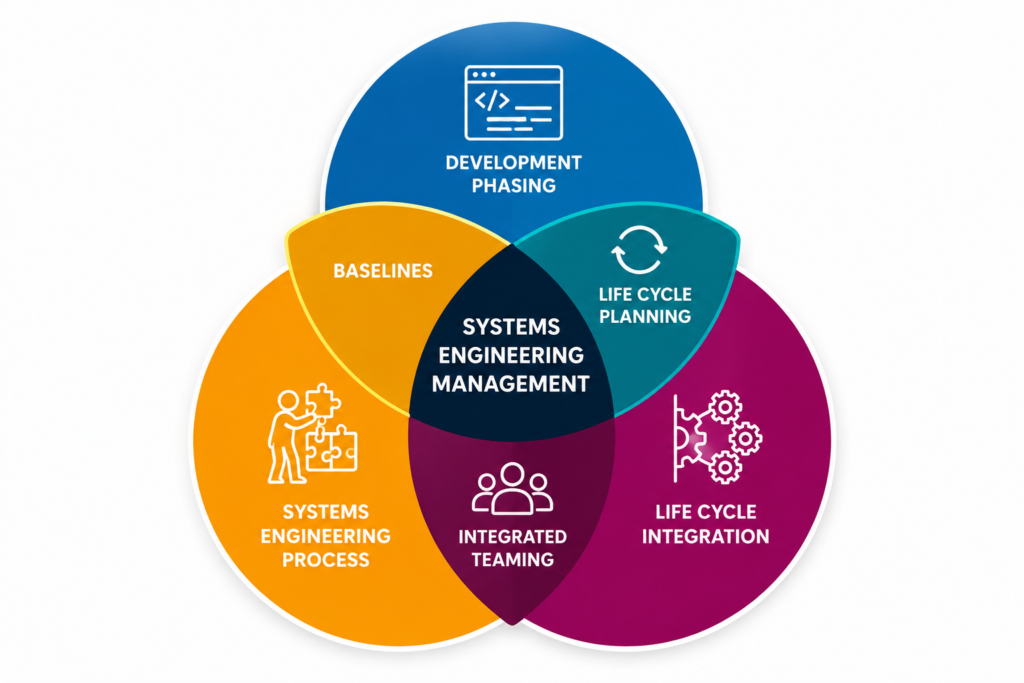
Why Systems Engineering Matters
Organizations across defense, aerospace, transportation, manufacturing, and industrial sectors rely on Systems Engineering to improve project outcomes. SE Technical and Management processes allow to coordinate engineering disciplines and manufacturing to produce an integrated solution meeting stakeholders’ requirements conforming to regulatory obligations.
Takes into account all fields/ factors involved in product development stages. SE helps to:
- Understand the complete system lifecycle for objective progression.
- Improve requirements management to transform these into an effective product.
- Enhance cross-functional collaboration using technical & management processes.
- Reduce technical risks through application of suitable technique.
- Enhance system integration to synthesize elements into a realized product.
- Support better decision-making through structured and informed means.
- Increase product reliability and maintainability.
These activities lead to higher-quality products and more predictable project delivery. Professionals involved in complex engineering projects including Engineers, Project Managers, Consultants, Defence and Aerospace professionals, Product Development teams should develop better understanding of structured engineering methodologies.
Key Areas Covered in Systems Engineering
Systems Engineering is structured across various disciplines building upon one another to afford all-inclusive functioning and making it critical to successful projects:
System and Product Lifecycle
Explore the system lifecycle from concept to disposal. How each stage planning, production, sustainment, and disposal is interconnected and requires unique considerations. Understanding of the lifecycle, help to plan and execute projects efficiently while addressing challenges at every stage.
Technical Processes
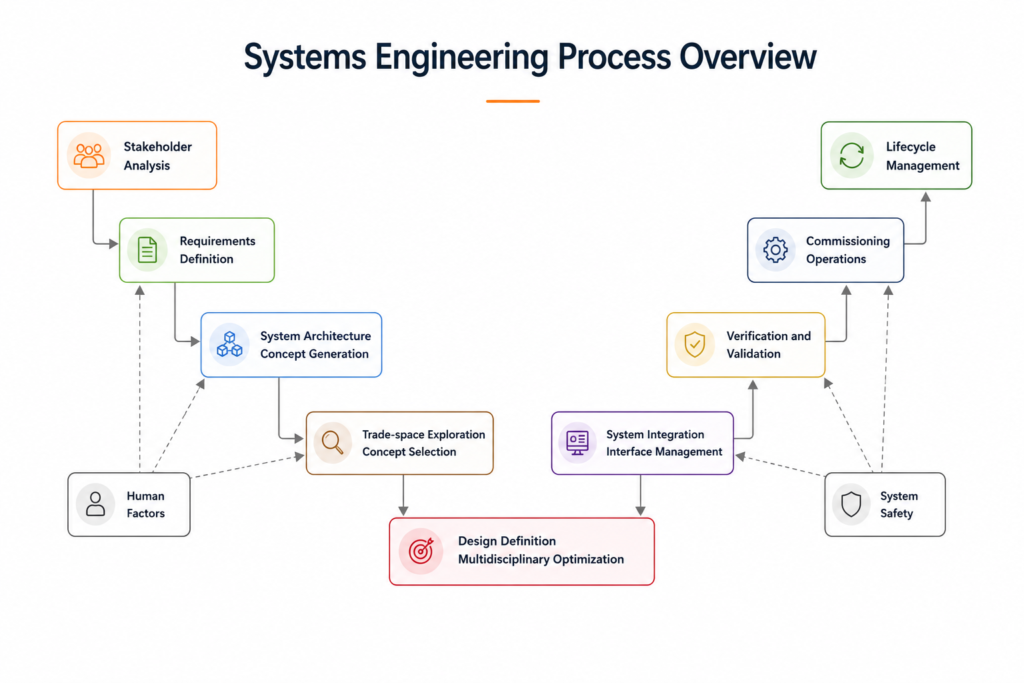
Technical processes are the backbone of Systems Engineering. From requirements definition and system architecture to integration, verification, and validation, the processes ensure a system meets its intended purpose. These processes are crucial for technical success and system integrity.
Technical Management Processes
The management processes provide structure and ensure that technical goals align with project objectives, timelines, and budgets. This includes risk management, configuration management, and decision analysis.
Reviews
Technical reviews are essential checkpoints to evaluate progress and ensure a project is on the right track. These may include system requirements reviews, preliminary design reviews, and critical design reviews, technology readiness review, production readiness review as well as their role in assessing project readiness and quality.
Applications & Tailoring
The practical application of principles tie everything together, providing actionable insights to implement Systems Engineering in various roles. Tailor SE methodologies to specific projects and scenarios, ensuring they are adaptable and effective in real-world situations.
Learn Systems Engineering with QVISE
At QVISE, our Systems Engineering Training equips professionals with practical knowledge to design, develop, and manage complex systems while improving collaboration, efficiency, and project success. Industry-focused Systems Engineering training designed to help professionals master complex projects with confidence. Through practical instruction, experienced trainers, and real-world case studies, participants gain valuable skills that can be applied immediately in their organizations.
Whether you’re working in defense, commercial, aerospace, or industrial sectors, QVISE’s Systems Engineering Training provides the knowledge needed to improve engineering performance and achieve successful project outcomes.