
Configuration/ Product Architecture Consistency is Critical
In today’s fast-paced engineering and industrial environment, managing changes effectively is just as important as designing quality products. From defense and aerospace to manufacturing and maritime industries, organizations rely on Configuration Management (CM) to maintain consistency in product architecture, control changes, and ensure that every system performs as intended. The efficacy of the logistics support system is highly dependent on CM to implement maintenance plans and source the right spare parts in the required quantities. CM is a key element of the systems engineering process, which governs product development and addresses all aspects of total system performance.
Configuration Management (CM)
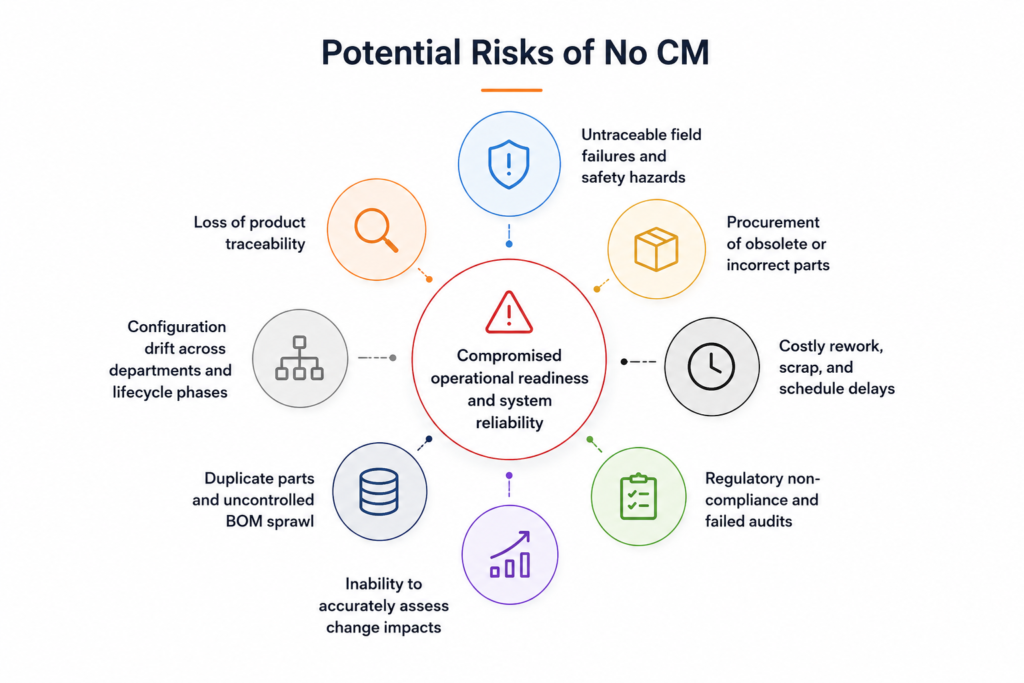
Configuration Management is the process of identifying, documenting, controlling, and tracking changes to a product or system throughout its lifecycle. It ensures that all components, software, hardware and documents remain accurate and aligned with project requirements. A well-implemented CM process provides complete visibility into product configurations, making it easier to manage updates, audits, and maintenance activities. Configuration Management helps organizations minimize risks, improve product quality, and maintain consistency throughout the project lifecycle.
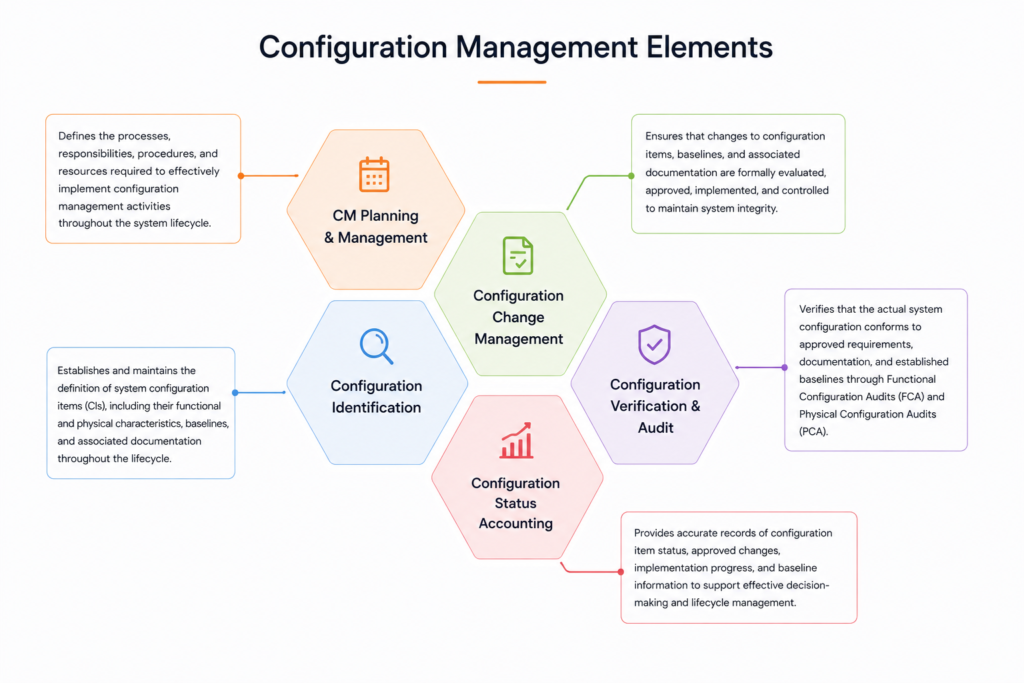
Who Does CM
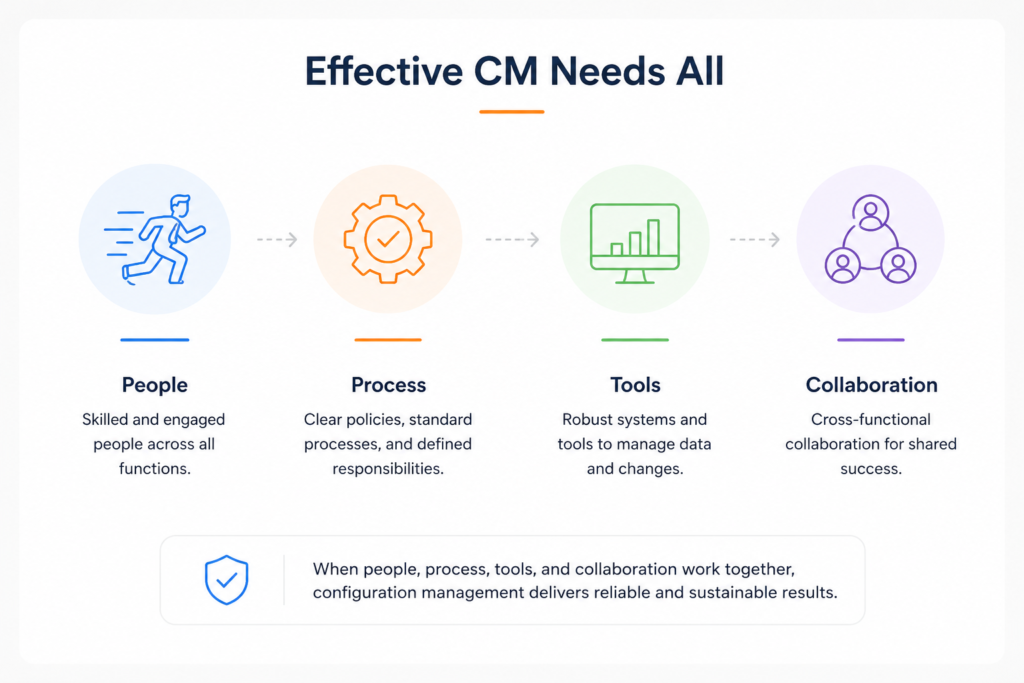
There are various roles and responsibilities in an organization that are cross functional. CM professionals define and manage the CM processes but interact with people from all departments along with customers and vendors. Configuration Management processes define how the organization is supposed to work efficiently minimizing rework and saving cost. Professionals working on complex products and critical infrastructure with good understanding of CM principles enable organizations to maintain control, improve collaboration, and ensure products remain accurate and compliant throughout their lifecycle.
Learning needs
Configuration Management knowledge is valuable for Defense and Aerospace Personnel, Project Managers, System, Design and Manufacturing Engineers, Quality Assurance, Maintenance and Logistics teams.
Professionals should learn how to:
- Manage configuration items and documentation.
- Control product changes systematically.
- Maintain accurate version control.
- Perform configuration audits and verification.
- Improve collaboration across project teams.
- Ensure compliance with industry standards.
What QVISE Offers
QVISE offers industry-focused Configuration Management training designed to combine international best practices with practical applications. Our courses help participants understand the complete Configuration Management process, from identifying configuration items to managing engineering changes and conducting audits.
With experienced instructors and real-world examples, QVISE equips professionals with the expertise needed to improve project control, reduce risks, and enhance product lifecycle management.