
Fast Evolving Technology Affecting Long-Term Project Success?
Technology is evolving faster than ever, innovations and upgradation in electronics, software, automation, and digital connectivity is shaping industries at an unprecedented pace, making component and equipment obsolescence a major challenge for industries of defense, aerospace, maritime, manufacturing, and transportation, where extended life of system/ equipment is involved. Obsolescence is not simply about aging technology or component; it is the gradual loss of accessibility and support of the part that might have critical role in equipment’s operation eventually leading to increased maintenance costs, supply chain disruptions, and reduced system availability. Without a pre-defined strategy organizations are left with limited options available to react and that’s where Obsolescence Management (OM) plays a vital role.

What Is Obsolescence Management?
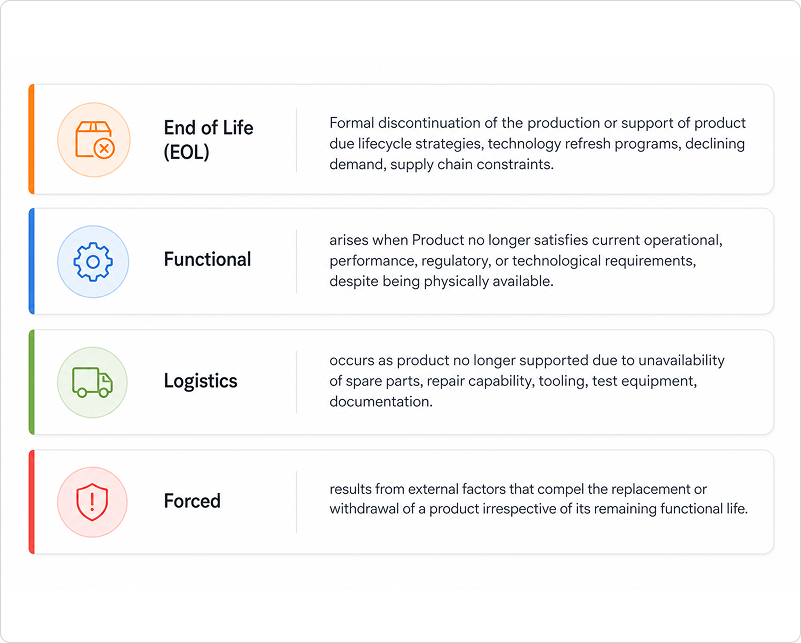
Obsolescence Management is the cross-disciplinary activity that systematically identifies, assesses, benchmarks, and tracks organizational exposure to potential obsolescence risks affecting people, processes, products and support throughout the lifecycle. It addresses various forms of obsolescence, including End-of- life (EOL), Functional, Logistics, and Forced obsolescence by managing their potential impact on the product or process.
Obsolescence Management be handled through proactive, reactive and strategic approach.
- Reactive Approach: Determines an appropriate resolution for obsolete components while documenting and tracking the actions taken.
- Proactive Approach: Monitors critical components to identify and mitigate potential obsolescence risks before they impact system availability.
- Strategic Obsolescence Management: Uses data, logistics management inputs, technology forecasting, and business trends to enable strategic planning, lifecycle optimization, and long-term business case development.
What Makes Obsolescence Management Essential?
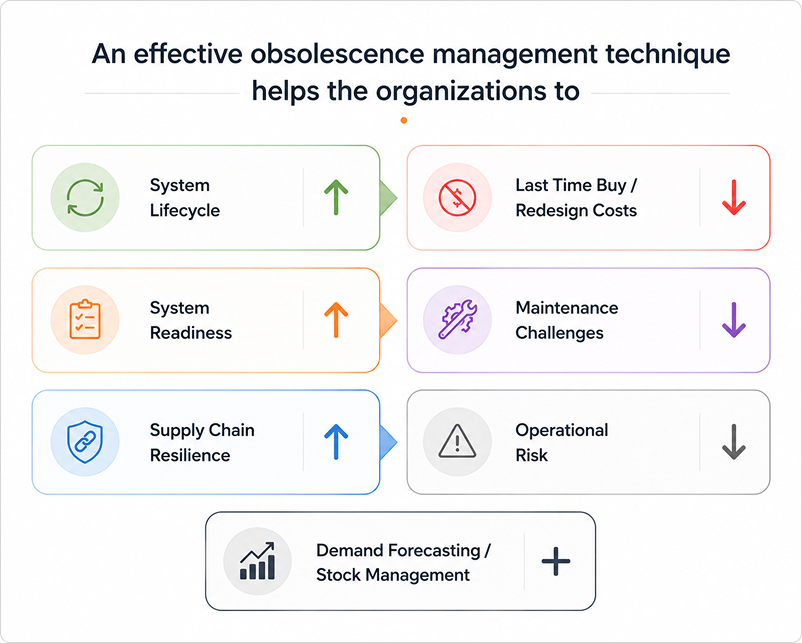
Obsolescence management delivers benefits that are beyond replacing outdated components and it is equally beneficial for any organization that deals with long life assets, complex supply chain network and relies on rapidly evolving technology i.e. (software, electronics etc).
Implementing Effective Obsolescence Management
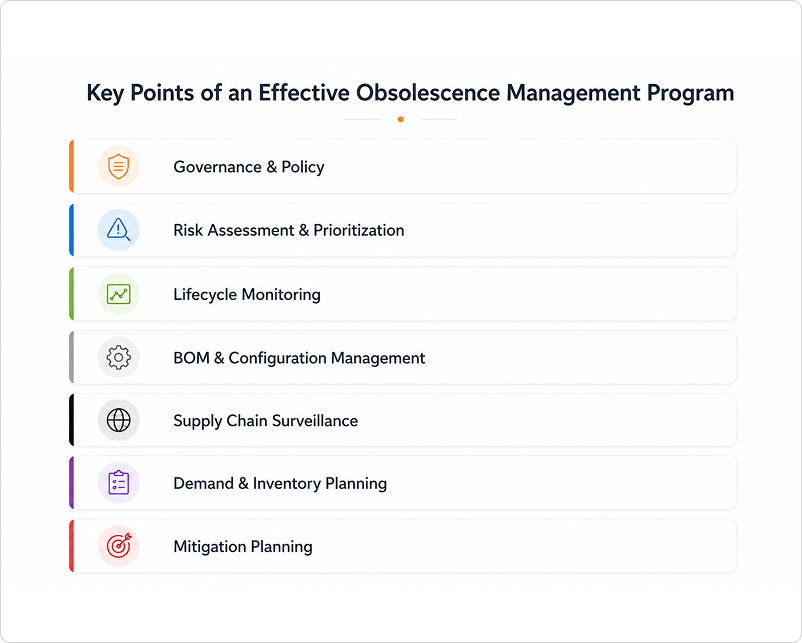
Obsolescence is inevitable, but project delays and costly fixes don’t have to be. Instead of attempting to predict every future innovation, organizations should invest in implementing the right Obsolescence Management mechanism. This can be implemented with the help of an integrated team of engineers, project managers, and logistics professionals having an understanding of Obsolescence management.
How QVISE Helps With Obsolescence Management
QVISE delivers practical, industry-focused Obsolescence Management training [AA1] designed to help professionals manage technology changes with confidence. Our courses combine proven methodologies, real-world case studies, and best practices to prepare participants for the challenges of modern lifecycle management.
Beyond training, we partner with organizations to establish and manage effective obsolescence management programs. Through hands-on collaboration and knowledge transfer, we equip your team with the tools, insights, and expertise needed to build long-term self-reliance in managing obsolescence.