
Integrated Product Support – a need for Industries?
Organizations invest in complex engineering systems with the sole objective of Maximizing Operational Performance while Minimizing Cost. Generally, most of the effort is focused on installation & commissioning of the system and production. Assuming that the system support including maintenances, spare parts, training, documentation, facilities and infrastructure etc., can be developed once the system enters service. This assumption often leads a technically successful project into operationally inefficient. A system can meet every performance specification during acceptance testing and still fail to achieve business objectives if it can’t be economically operated and maintained over intended lifecycle.
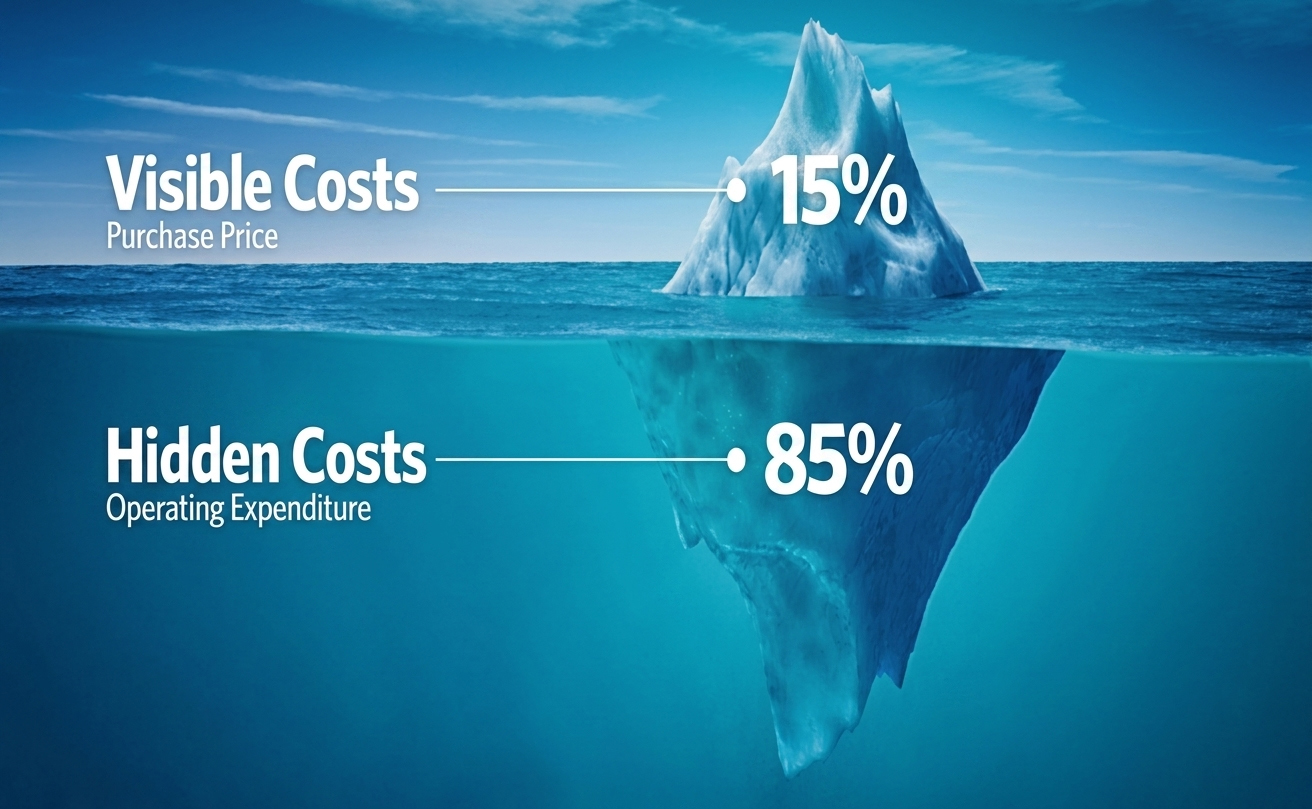
The Real Cost is not Procurement but Ownership
For high-value assets such as aircraft, ships, power generation equipment, railway systems, manufacturing lines, and industrial automation, the procurement cost is only the beginning. While procurement costs are visible and incurred upfront, the majority of lifecycle costs arise from operations, maintenance, and support, these hidden costs determine the true Total Cost of Ownership (TCO).
System Performance means little without Operational Effectiveness
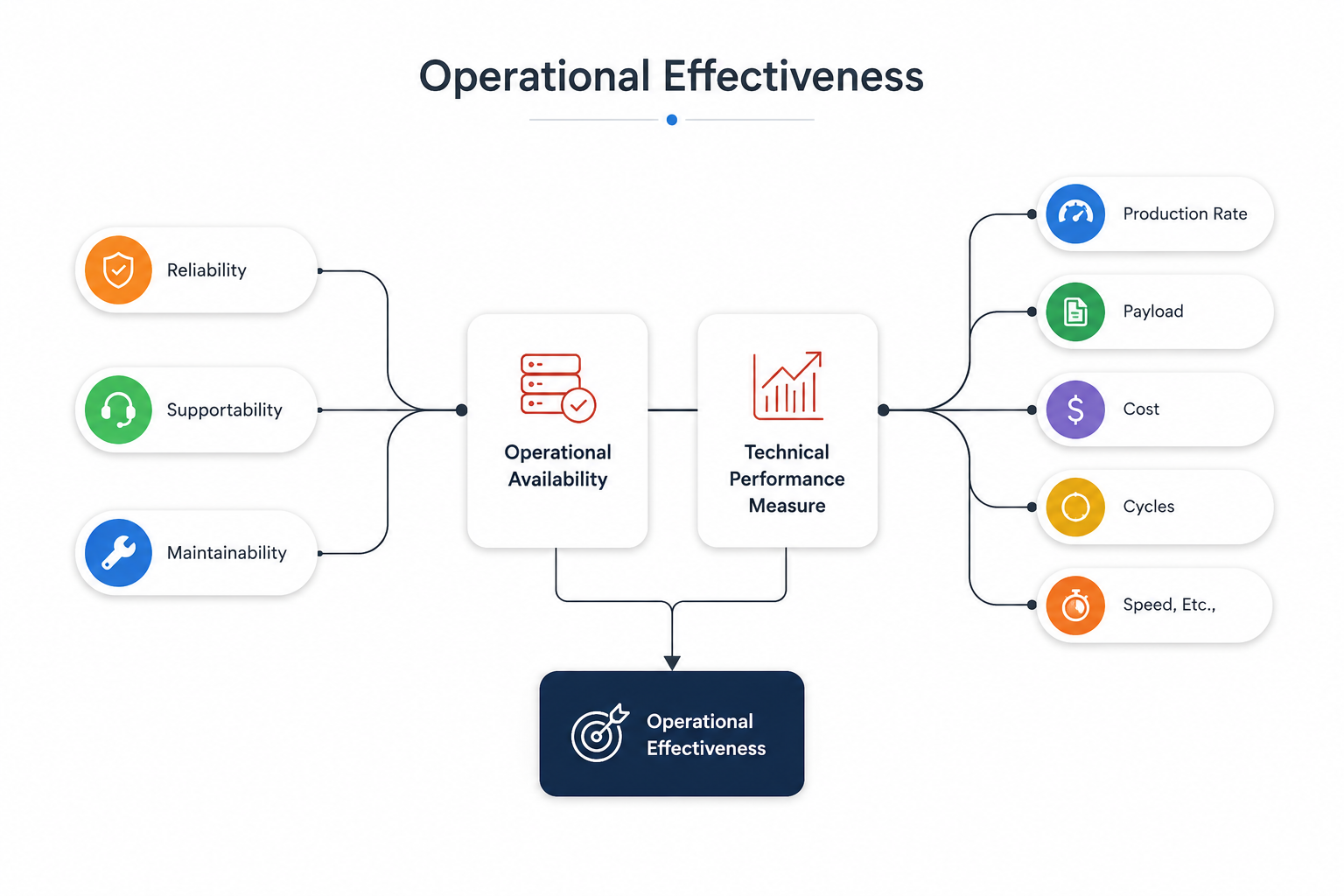
Traditional system performance assessments often emphasize technical performance measures (TPMs) such as throughput, power output, precision, efficiency, payload capacity, processing speed, manufacturing cost, production rate, yield or cycle time. They provide only a partial view of its operational effectiveness, the probability of system performing intended function while meeting technical performance measures under actual operating conditions.
Integrated Product Support (IPS)
Over the years of operation, organizations continue to spend on scheduled maintenance, unscheduled repairs, spare parts, software updates, technical publications, personnel training, support equipment, and infrastructure.
From an operational perspective, the critical measure of success is operational availability, the probability that a system is in a functional state and capable of performing its intended mission when required under actual operating conditions, unlike measures that focus solely on inherent technical performance, operational availability reflects the combined effects of reliability, maintainability, and supportability.
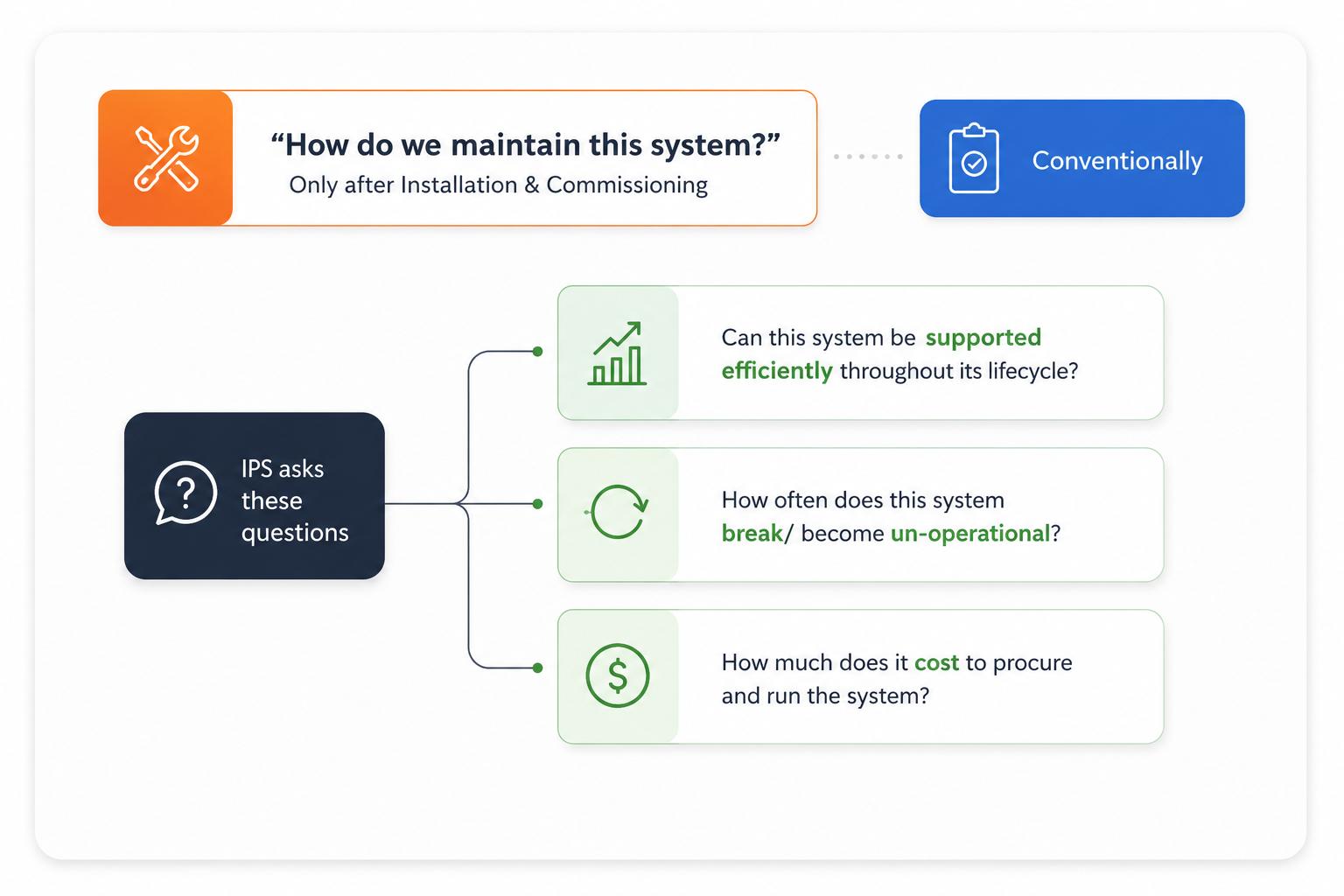
A balanced approach to evaluate a system is based on two fundamental questions.
Is the system affordable? Is it reliable? To deal with such a challenge Integrated Product Support (IPS) helps these organizations by optimizing lifecycle cost and maximizing operational availability.
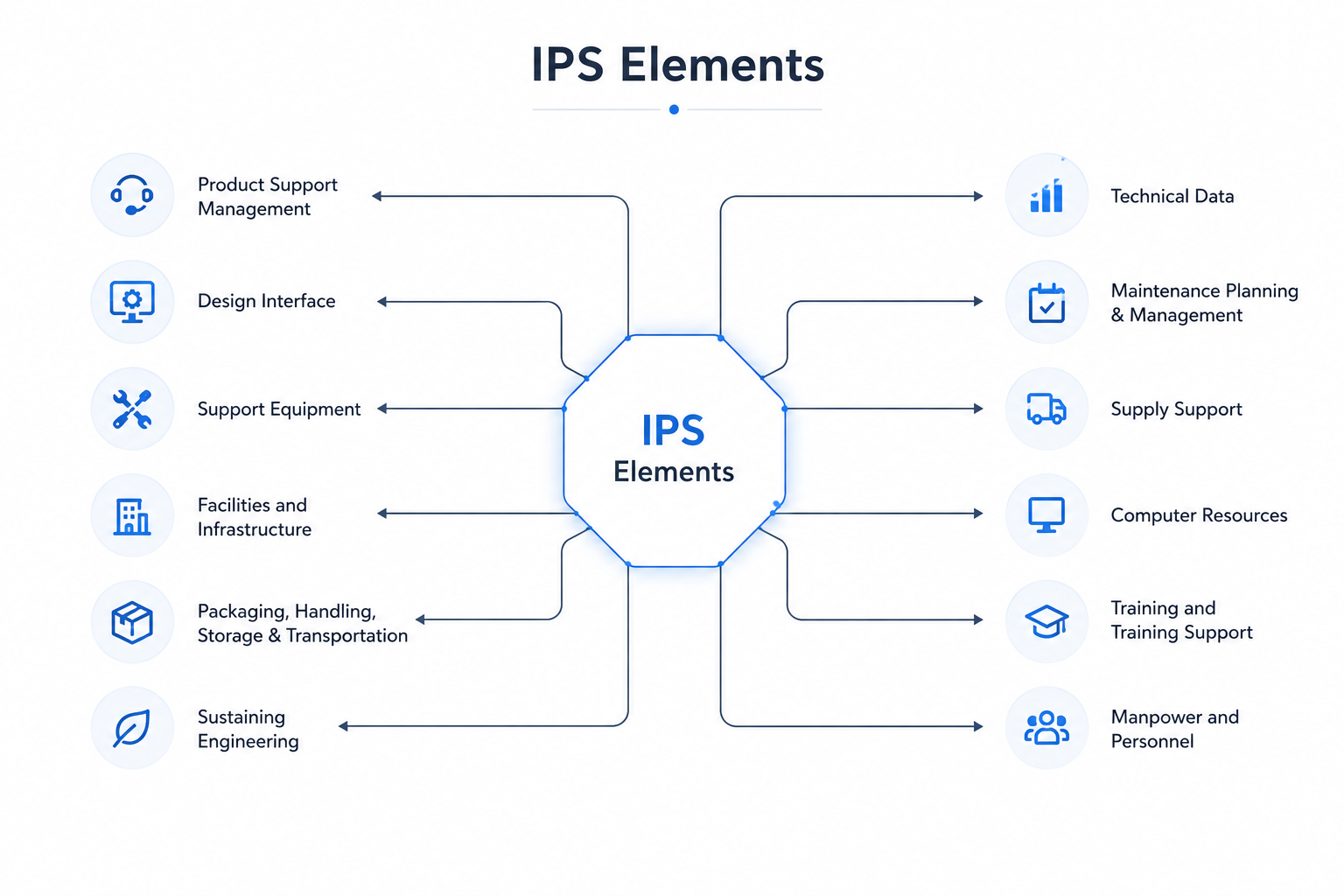
IPS is the management and technical process through which supportability and Product support considerations are integrated into design of a system or equipment and taken into account throughout its life cycle. It is the process by which all elements of Product support are planned, acquired, tested, and provided in timely and cost-effective manner to maximize operational availability.
The Strategic Value of IPS Beyond Maintenance
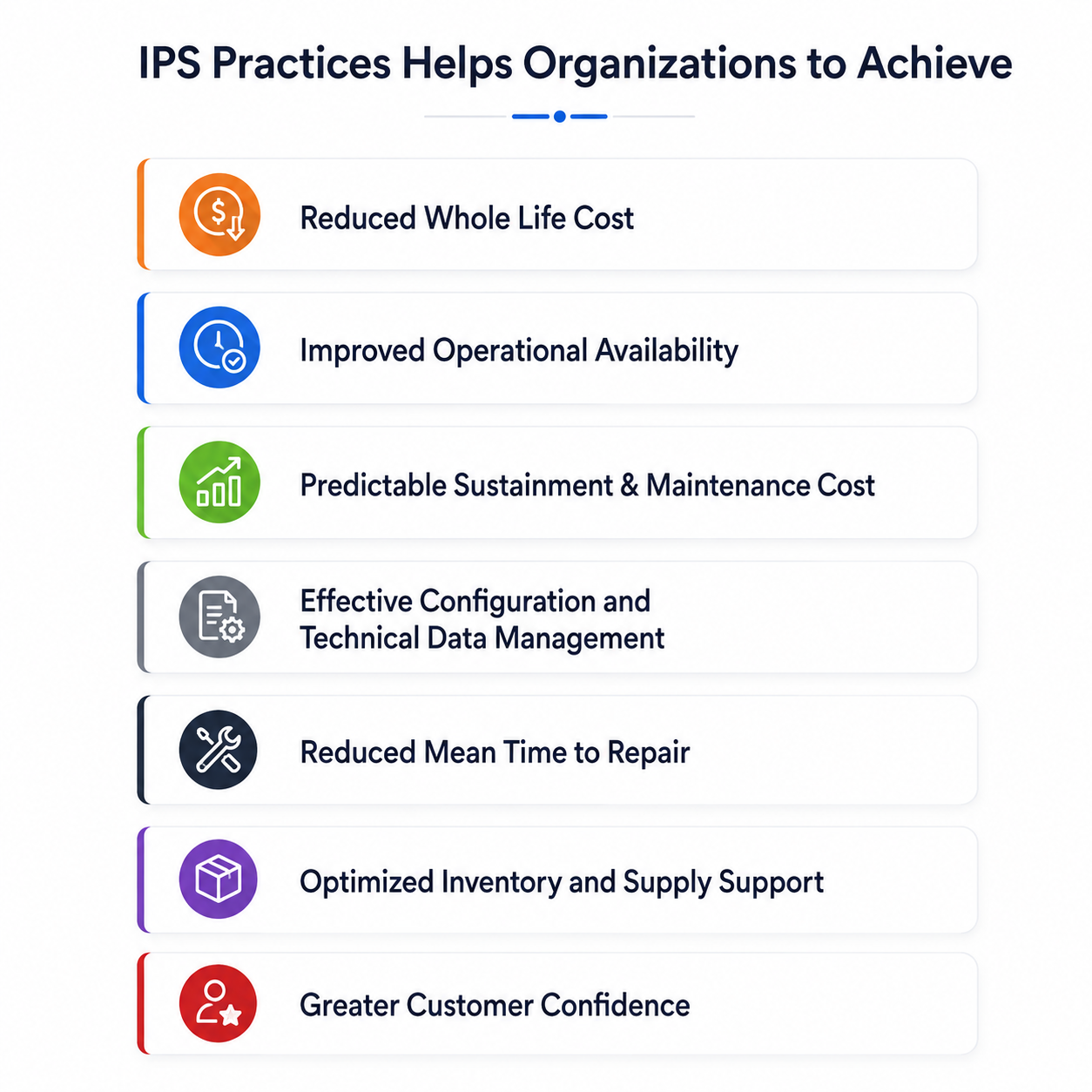
Product support is often associated with operational expenditure, but in modern engineering environments Integrated Product Support (IPS) is a strategic capability that enables sustainable operational readiness and availability while keeping the lifecycle cost minimal. The value of IPS extends beyond engineering and maintenance functions. It directly supports informed decision making across acquisition, finance, procurement, operations, supply chain management and customer support, enabling organizations to achieve long term business success.
Are you willing to embark on this journey?
QVISE & IPS
At QVISE, we deliver standard and customized or closed loop Integrated Product Support (IPS) training and services that enable organizations to maximize system availability, enhance operational readiness, and optimize whole-life support costs. Our solutions are tailored to the specific operational, regulatory, and business requirements of each client.
Over the years, we have helped organizations develop practical IPS capabilities through results-driven training and expert advisory services. By applying industry best practices and internationally recognized supportability principles, we enable our clients to improve asset performance, optimize maintenance and sustainment strategies, strengthen supportability planning, and achieve measurable improvements in operational and lifecycle performance.